
OpinionMedium
Why Dangote Extended an IPO That Was Already Oversubscribed
Dangote Refinery could have closed its share sale on 13 October with more money than it asked for. It pushed the deadline to 27 October instead. The reason is not financial, and it is worth understanding before you apply.
By Betini Udom Published 6 min read Editorial Policy Report a correction
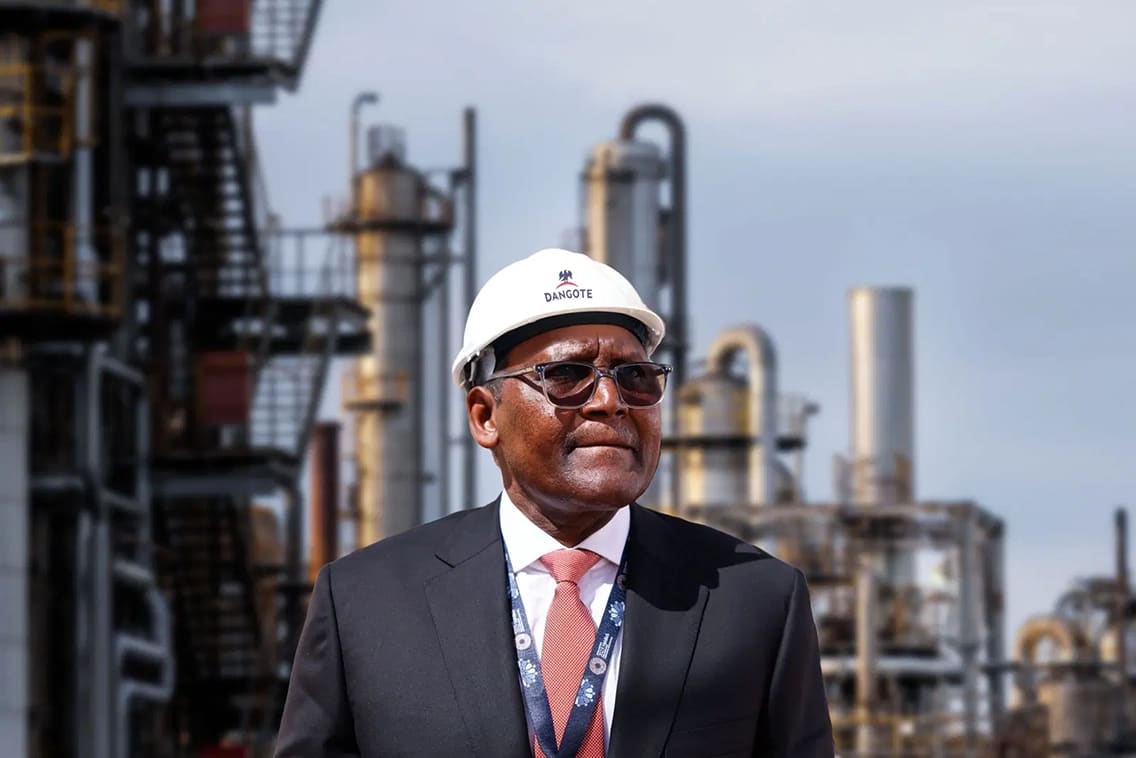
On 13 October, the day the Dangote Refinery share offer was supposed to close, the company announced it would stay open for another fortnight. The Securities and Exchange Commission approved the extension. The new deadline is 27 October.
What makes this unusual is the reason it was not needed. Aliko Dangote has said demand is running at three to four times the amount the offer sought. The company has not published a subscription figure, so treat the multiple as a claim rather than a verified number. But nobody disputes the direction: the money was there.
A company that has already raised more than it asked for does not normally extend the deadline. It closes, allots, and gets on with listing.
Dangote said the quiet part out loud, which I give him credit for. "It's not about the amount; it's about the number of people that we want to participate in this offer." The group's refinery chief executive, David Bird, said the extra time would extend the opportunity to more investors across Africa.
So this is not a fundraising exercise that happens to be popular. It is a shareholder recruitment drive that happens to raise money. The target that has been talked about is up to ten million retail investors.
That is a legitimate corporate strategy, and an interesting one. It is also a different thing from what most people think they are participating in, and the difference matters.
What is actually on sale
Start with the proportion, because almost nobody is quoting it.
The offer is 4.1 billion new shares at ₦525 each — about ₦2.15 trillion, or roughly $1.6 billion, if fully taken up. That represents about 3.3% of the enlarged share capital. If the 30% over-allotment option is exercised in full, proceeds rise to around ₦2.8 trillion and the public stake reaches roughly 4%.
So when ten million Nigerians are invited to own a piece of Africa's largest refinery, the piece on offer is about three or four parts in a hundred. The other ninety-six stay exactly where they are.
That is not a criticism. It is how most large IPOs work, and a small float is normal for a first listing. But "the people's IPO" is civic language, and civic language invites readers to imagine a transfer of ownership that is not taking place. You are buying a minority sliver of a company that will continue to be controlled, decisively, by its existing owner.
Knowing that changes how you should think about your shares. You are not getting a say in how the refinery is run. You are buying exposure to its profits, if it distributes them, and to its share price, if the market agrees with you.
Why a company wants small shareholders
Here is the part I find genuinely interesting, and it is not cynical.
There are real advantages to a register full of ordinary citizens, and they are strategic rather than financial.
Political durability. A company with ten million Nigerian shareholders is a different political object from a company owned by one man and some institutions. Regulatory decisions, crude allocation disputes, import policy arguments — all of these become harder to resolve against a company when millions of voters own a piece of it. That is not corruption; it is how broad ownership works everywhere.
Price stability. Retail shareholders typically hold. Institutions trade. A share register weighted toward small, long-term holders is less volatile, which is useful for a company that will want to raise more capital later.
Distribution. The refinery sells fuel to Nigerians. A customer who owns ten shares is a slightly different customer.
None of this makes the shares a bad buy. It does mean that when a company tells you it wants you specifically — not your money, which it already has, but you — the invitation is serving the company's interest as well as yours. Both can be true. You should simply know it.
The numbers behind the offer have got much better
In fairness to the investment case, which I set out sceptically when the offer opened, the company published nine-month results on 13 October and they are extraordinary.
Net income of $4.73 billion, against a loss of $117.2 million in the same period a year earlier. Revenue of $22.48 billion, up from $9.19 billion. EBITDA of $5.52 billion against $627.6 million. Operating cash flow of $3.68 billion. The balance sheet moved from net debt of $1.73 billion to net cash of $650.8 million, with $6.69 billion of cash on hand. The 700,000 barrel-a-day plant reached full crude distillation utilisation in the second quarter.
When I wrote about this offer in September, my central objection was that six months of profit is a data point rather than a track record. Nine months is better, and the operational milestone — running the main unit at full rate — answers a real question about whether the plant works at scale. It does.
But look closely at what produced the profit. The gross refining margin rose to $24.50 a barrel in the first half, from $13.70 a year earlier. The refinery is earning roughly seventy-nine per cent more on every barrel it processes.
That margin is not primarily a management achievement. It is the product of a global crude market disrupted by a Middle Eastern war, which has lifted refined product prices relative to crude. Brent is up more than seventy per cent over twelve months. Refiners everywhere are having a remarkable year.
So the honest reading of these results is: a well-built plant, now proven at full rate, operating in exceptionally favourable conditions. Two of those three things are durable. The third is not, and it is the one doing most of the work in the profit figure.
What a first-time buyer should actually do
Read the margin, not the profit. When the refinery reports next year, look at the gross refining margin per barrel before you look at net income. If margins normalise toward historic levels and profit holds up, the business is as good as the bulls say. If profit falls with margins, you have learned what you own: a cyclical business, bought at the top of a cycle.
Treat the extension as information, not pressure. You have until 27 October. Nothing about a longer window makes the shares better value; the price is fixed at ₦525 either way. Use the time to read the prospectus section on crude supply, which remains the live operational question.
Size it as a first position, not a national duty. The minimum is ten shares, ₦5,250. For most first-time investors that, or something near it, is the right amount — enough to learn how settlement, allotment, dividends and price movement actually work, small enough that being early or late costs you a lesson rather than a year's savings.
Expect to be scaled back. In an oversubscribed offer, applicants usually receive fewer shares than they applied for, with the balance refunded. Plan for the refund; do not commit money you need before it arrives.
The bottom line
A company extending an oversubscribed offer is doing something unusual, and it has been admirably direct about why: it wants shareholders more than it wants the next tranche of naira.
That is a reasonable ambition, and a country where millions of people own a piece of their largest industrial asset is a better-informed country than one where nobody does. I would rather Nigerians learn how equity works through this offer than not learn at all.
Just hold both facts at once. You are being invited into something genuine, at a moment when the underlying business is performing exceptionally well, for reasons that include a war. And the stake being shared is 3.3%.
Enthusiasm and arithmetic are allowed to coexist. This offer deserves both.
Sources & Verification
- Dangote Petroleum Refinery and Petrochemicals IPO prospectus and offer terms.
- Securities and Exchange Commission approval of the two-week extension, 13 October 2026.
- DPRP unaudited nine-month results to September 2026, published 13 October 2026; statements by Aliko Dangote and DPRP chief executive David Bird.
- Brent crude benchmark via Trading Economics, 20 October 2026. Subscription multiples are as stated by the company and have not been independently verified.

Founder and Editor-in-ChiefAbuja
Betini Udom
Founder and Editor-in-Chief of RainingMoney. Covers Nigerian, pan-African and global markets, finance and economic policy.
Author profile & archive →The Money Print
Market intelligence before the market opens.
Pan-African capital flows and the stories behind the numbers, on weekday mornings.