
FinanceLow
CBN okays JPMorgan's plan for a Nigerian merchant bank: what it means and what it doesn't
The CBN has given JPMorgan approval-in-principle to open a merchant bank in Nigeria. It is a first step, not a licence. Here is what that means, in plain words.
By Betini Udom Published 5 min read Editorial Policy Report a correction

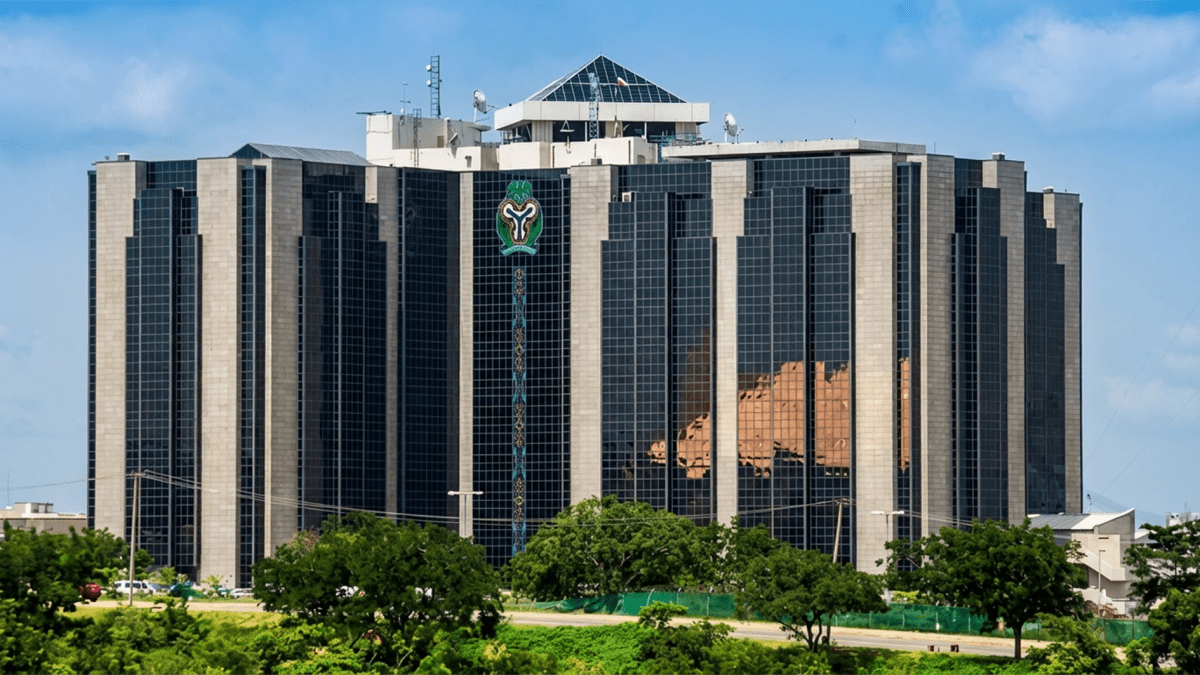
The Central Bank of Nigeria (CBN) has said yes to JPMorgan, but only a first yes. It has granted the American bank an Approval-in-Principle (AIP) to set up a company called JPMorgan Merchant Bank Nigeria Limited. That does not mean the bank is open. It means the CBN has agreed, in principle, to let the process continue.
This article explains the news in plain words.
What exactly did the CBN approve?
The CBN gave JPMorgan an Approval-in-Principle. Think of it like an early green light on a building plan. The authority says the plan looks acceptable, but you may not move in or start trading yet.
The announcement came from Michael Akuka, who heads the CBN's Corporate Communications and Investor Relations Department. The AIP is an initial stage of the licensing process and does not allow the proposed bank to begin business.
So can JPMorgan Merchant Bank take deposits or give loans now?
No. The report is clear on this. Before the CBN can issue a final banking licence, the company must complete the regulator's requirements. The report names two of them: incorporation with the Corporate Affairs Commission (the government body that registers companies in Nigeria) and the necessary operational arrangements.
The report does not say how long this will take. It does not give a date for a final licence either. Anyone who tells you the bank will open on a given day is guessing.
What is a merchant bank?
A merchant bank usually serves companies, governments and large investors rather than ordinary savers. It is the kind of bank a big firm might use to raise money, arrange large deals or get advice on them. It is not usually the place where you open a salary account or collect a small loan.
That is RainingMoney's background explanation. The report does not list the services JPMorgan Merchant Bank Nigeria would offer. It says only that converting JPMorgan's Lagos office would expand the range of services it can provide to Nigerian corporate clients.
Who is JPMorgan, and is it new to Nigeria?
JPMorgan Chase & Co. is the largest bank in the United States by assets, according to the report. It is not new to Lagos. The report says it has a longstanding representative office there.
A representative office is a limited presence. It generally helps a foreign bank keep in touch with clients and markets, but it does not operate as a full bank. The report says JPMorgan plans to convert this office into a fully operational business branch. How that conversion fits alongside the new merchant bank company is not explained in the report, so we flag it as an open question.
Who will run the proposed bank?
The CBN also approved the people proposed to lead it. Adedapo Adedayo Olagunju was approved as managing director.
Three people were approved as non-executive directors, meaning directors who sit on the board but do not run the bank day to day: Latter Kevin George, Nzelu Chinedum Izunwanne and Syed Gabriel Murtaza.
Three more were approved as independent non-executive directors, meaning board members with no close ties to the bank's owners or management who are meant to give an outside view: Alade Sarah Omotunde, Ajayi Olukonyinsola and Adetu Seni.
What has JPMorgan already put down?
JPMorgan had deposited ₦50bn, equivalent to $38M, with the CBN while its application moved forward.
To give a sense of scale, the two figures imply a rate of about ₦1,316 to the dollar. This is derived: ₦50bn divided by $38M. It is only a rough implied rate from the report's own numbers, not an official exchange rate.
Another way to see ₦50bn is per person. Spread across 1,000 people, it would be ₦50M each. That is simply arithmetic to show the size, and it says nothing about how the money will be used.
Why is the CBN doing this now?
The CBN said the approval follows the successful implementation of Nigeria's banking sector recapitalisation exercise. Recapitalisation means requiring banks to hold more capital, which is the owners' own money kept in the business as a cushion against losses. The CBN said the exercise was designed to strengthen the resilience and capacity of the financial system.
The CBN also tied the approval to its reform agenda under Governor Olayemi Cardoso. Governor Cardoso is quoted as saying: "Our objective is to build a financial system that is stable, competitive and internationally connected, one that commands confidence and can effectively support investment and economic growth."
The report adds that the CBN wants an environment where domestic and international financial institutions can participate and grow. The reforms aim at financial stability, better market confidence and deeper links with global capital markets.
The CBN did not say why JPMorgan, specifically, chose a merchant bank route. RainingMoney's reading: a licensed local bank lets a foreign firm do more directly than a representative office can, but the CBN and JPMorgan have not said this is the reason.
How could this reach my money?
In the short term, it does not. An AIP does not change interest rates, bank charges, naira rates or prices. Nothing in the report says it will.
Over time, the effect would depend on whether the final licence is granted and what the bank does. Here is how it could work in general terms, and this is RainingMoney's reading rather than anything in the report.
- A merchant bank in Nigeria could deal with large Nigerian companies directly.
- If those companies find it easier to raise money or arrange deals, they may be able to expand, hire or invest.
- More competition among banks serving big clients can affect the prices and terms those clients are offered.
None of those steps is confirmed. They show the sort of chain by which a bank licence can matter to people who never visit the bank.
What is still not known?
- When JPMorgan Merchant Bank Nigeria Limited will get a final licence, if it does.
- What the ₦50bn deposit is for, and whether it is a capital requirement.
- Which services the bank will offer, and to which clients.
- How the Lagos representative office will be converted, and how that sits beside the new company.
- Whether JPMorgan has said anything itself. The report quotes only the CBN.
What should I watch for next?
The next real signal is JPMorgan completing its incorporation with the Corporate Affairs Commission and the CBN confirming the other requirements are met. Only then can the CBN issue a final licence. Until that happens, this is an early step in a longer process, and it is best read as exactly that.
Sources & Verification
- Source:Nairametrics
- Editorial note: This explainer is an original RainingMoney editorial adaptation of the Report, RainingMoney has added explanatory context.

Founder and Editor-in-ChiefAbuja
Betini Udom
Founder and Editor-in-Chief of RainingMoney. Covers Nigerian, pan-African and global markets, finance and economic policy.
Author profile & archive →The Money Print
Market intelligence before the market opens.
Pan-African capital flows and the stories behind the numbers, on weekday mornings.